

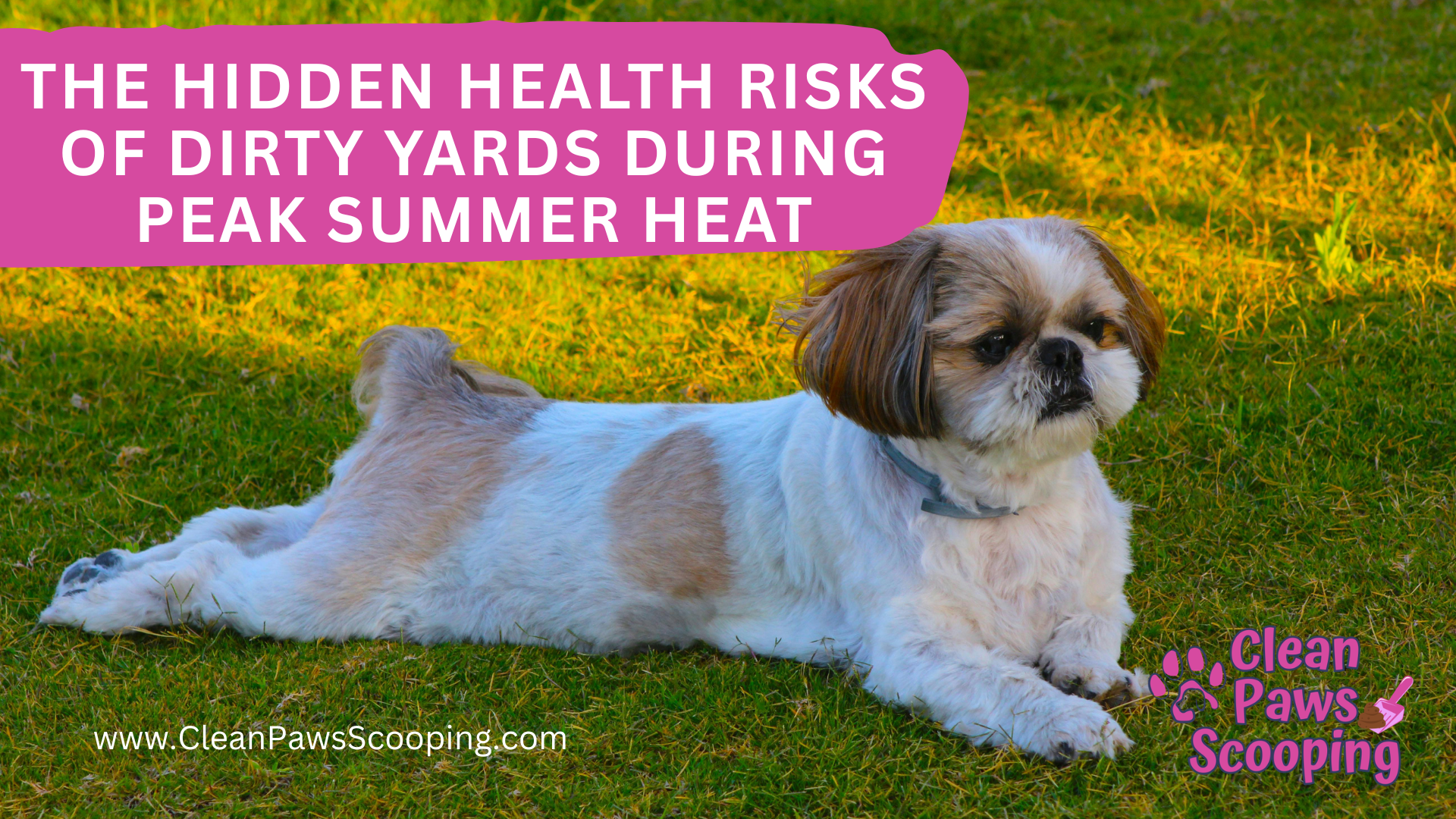
The Hidden Health Risks of Dirty Yards During Peak Summer Heat
8 Things to Do After You Realize Your Yard Needs Immediate Attention
Introduction
So you just stepped outside with your dog and immediately noticed the smell.
The grass feels sticky under your shoes.
Your dog is sniffing places you wish they would not.
Summer heat has a way of exposing problems that quietly built up during spring. What looked manageable a few weeks ago can quickly turn into a health concern once temperatures rise.
The question is, what should you do next?
Should you rinse the area and hope for the best?
Should you wait until the weekend?
Or should you assume this is just part of having a dog in summer?
In today’s post, we’re walking through eight essential steps to take after you realize your yard is no longer as clean or safe as it should be during peak summer heat. These steps help protect your dog’s health, your family’s comfort, and your yard itself.
Dirty Yards During Summer Heat
8 Things to Do After You Notice the Problem
Many dog owners think once the mess is visible, the damage is already done.
But smart pet owners know that what you do immediately after noticing the issue makes all the difference.
Step 1: Remove Existing Waste Immediately
Your first order of business is simple but critical. Remove all visible waste as soon as possible. In hot weather, bacteria multiplies faster, odors intensify, and flies become active within hours.
Many homeowners wait until later in the day or plan to handle it tomorrow. That delay is where problems start.
Instead, complete a full cleanup immediately. Even partial removal reduces bacterial load and prevents further contamination.
Heat intensifies bacteria and odor buildup, which is why understanding how dog waste pollution impacts air quality what you need to know in 2024 becomes especially important during peak summer months.
Step 2: Inspect High Traffic Areas Closely
Average dog owners scoop only the obvious spots. Smart dog owners check high traffic zones where waste tends to accumulate more quickly.
Pay special attention to:
• Fence lines
• Shaded corners
• Areas near doors
• Favorite potty paths
These spots trap moisture and heat, creating ideal conditions for bacteria growth.
If you find yourself consistently missing these areas, it may be time to rethink your routine rather than relying on quick visual checks.
Step 3: Rinse With Purpose Not Excess Water
Rinsing can help, but only when done correctly. Light spraying spreads bacteria deeper into soil instead of removing it.
Use targeted rinsing after cleanup to reduce residue, especially in areas where dogs frequently walk or lie down. Avoid overwatering, which keeps soil damp and encourages microbial growth.
For deeper sanitation, professional equipment and disinfectants designed for pet areas work far better than household hoses.
Step 4: Watch Your Dog for Subtle Health Changes
If your yard has been dirty during extreme heat, monitor your dog closely over the next few days.
Look for:
• Paw licking
• Digestive upset
• Increased scratching
• Lethargy
Many of these summer risks are preventable when owners already follow routines outlined in why routine poop scooping matters more in winter a better way to protect your yard and pets year round.
Step 5: Adjust Your Cleanup Frequency Immediately
Speaking of prevention, summer requires more frequent cleanup than cooler seasons.
Heat accelerates decomposition and odor. What felt manageable once a week in spring may no longer be enough.
Set aside time to increase frequency or consider professional service options during the hottest months. Consistency matters more than perfection.
Step 6: Reduce Exposure Zones
Another important step is limiting where your dog plays until conditions improve.
Temporarily restrict access to problem areas and encourage bathroom breaks in cleaner zones while you restore the yard.
This step alone reduces bacterial contact and helps prevent reinfection or irritation.
Pro tip: This is also a great time to plan yard flow and potty habits for long term success.
Step 7: Create a Summer Maintenance Reset
Summer is not the season to catch up later. It is the season to reset your system.
Create a simple plan:
• Designated potty areas
• Regular cleanup schedule
• Weekly inspections
• Seasonal deep clean reminders
Mixing up routines helps prevent buildup and keeps your yard manageable even during heat waves.
Step 8: Track and Reevaluate Every Two Weeks
This final step is often overlooked, but it matters most.
If you do not reassess your yard regularly, you will not know what is working. Every two weeks, walk the property and ask:
• Are odors reduced
• Is waste easier to spot
• Is my dog avoiding certain areas
If results are not improving, adjust frequency or seek professional support. Small changes early prevent bigger issues later.
Wrapping It Up
If you think your responsibility ends once the yard is cleaned, the real work has just begun.
What you do after noticing a dirty yard during peak summer heat determines whether the problem becomes a short term inconvenience or a long term health concern.
Instead of reacting repeatedly, focus on consistency, awareness, and prevention. When your yard stays cleaner, your dog stays healthier, your home smells better, and summer becomes something you can actually enjoy.
If you need help restoring your yard or maintaining a safer routine during the hottest months, professional pet waste removal can make all the difference.
Your dog deserves a yard that is clean, safe, and stress free even in summer.
Get Your Free Yard Cleanup Quote Today