

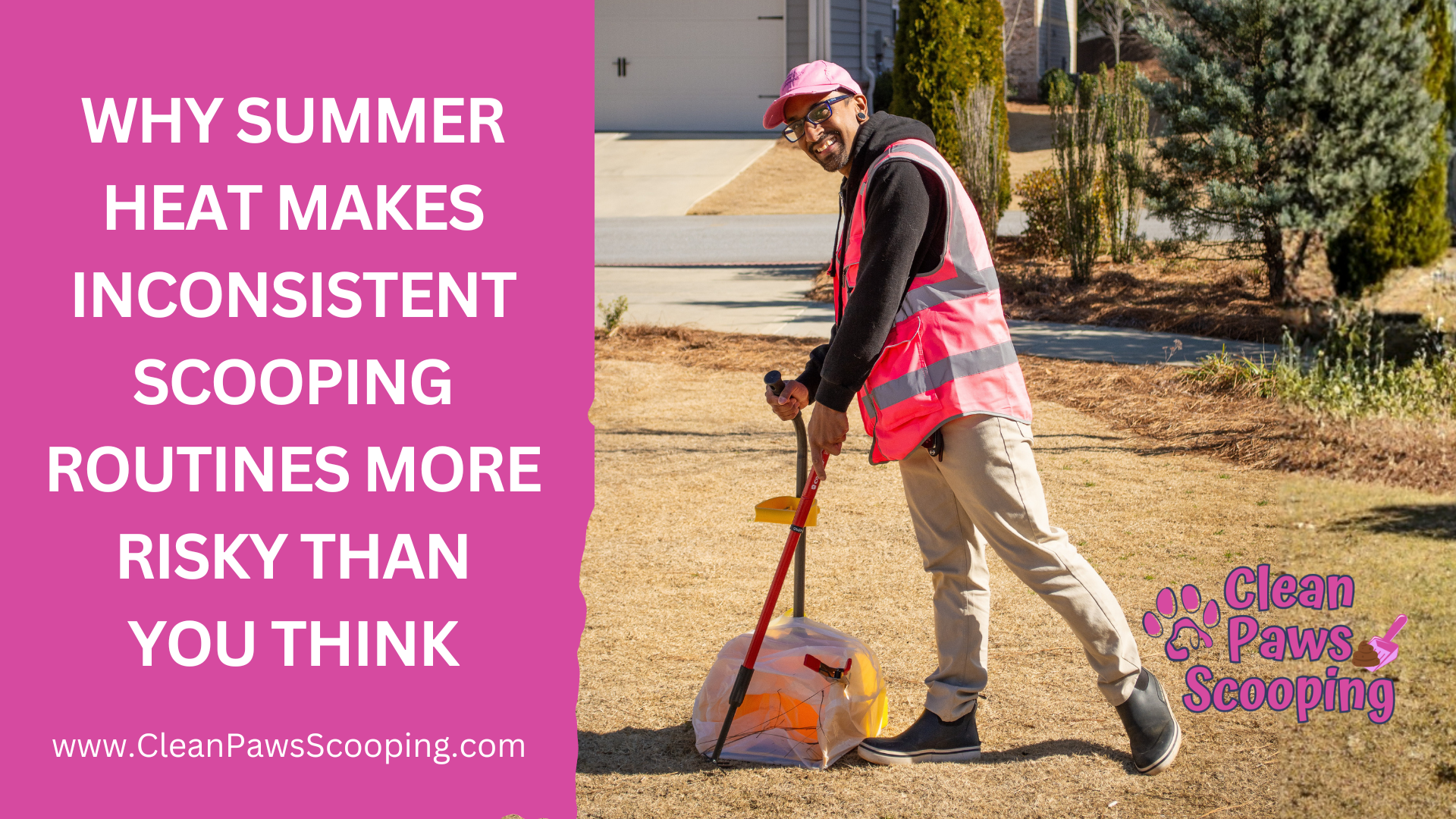
Why Summer Heat Makes Inconsistent Scooping Routines More Risky Than You Think
Why Summer Is Less Forgiving Than You Expect
When you first commit to a regular scooping routine, it usually feels manageable. Miss a week here or there. Catch up later. No big deal.
And for much of the year, that mindset doesn’t cause immediate problems.
Summer is different.
Heat doesn’t just speed things up. It compounds mistakes. Small gaps in routine turn into layered issues that don’t reset just because you eventually scoop again. What was once a visual cleanup issue becomes a sanitation and health issue, even if the yard looks “fine” on the surface.
This post breaks down why inconsistent scooping routines are far riskier in summer, and what actually happens in the yard when cleanup becomes irregular during peak heat.
#1: Forget the Myth That “One Missed Week Doesn’t Matter”
One of the most common beliefs dog owners hold is that missing a week of cleanup in summer won’t cause lasting impact if they catch up later.
In cooler months, that’s sometimes true.
In summer, it isn’t.
Heat accelerates bacterial growth, odor formation, and nutrient concentration in the soil. When waste sits longer than intended, it doesn’t pause in place. It changes.
Many owners do not realize that skipping even a week in summer creates compounding issues, especially when combined with what we covered in the hidden health risks of dirty yards during peak summer heat.
By the time cleanup resumes, the damage is no longer just about what’s visible.
#2: Stop Treating Visual Cleanliness as the Goal
A yard can look clean and still be unhealthy.
In summer, the most damaging effects of inconsistent scooping happen below the surface. Heat drives waste compounds deeper into soil, where they linger even after surface removal.
This is why owners often feel confused when:
- Smells persist after scooping
- Grass thins weeks later
- Dogs track residue indoors despite “clean” yards
Visual cleanup is necessary, but it is not sufficient in hot weather.
#3: Supercharge Your Routine by Thinking in Cycles, Not Tasks
Scooping is often treated as a task. A chore to check off.
In summer, it needs to be treated as a cycle.
Every skipped visit allows waste to move through stages:
- Fresh waste
- Breakdown
- Bacterial spread
- Soil saturation
Once the cycle advances, later scooping cannot reverse earlier stages.
This is why predictable routines matter more than intensity. A perfect cleanup done too late cannot undo what consistency would have prevented.
Establishing predictable routines is easier when owners understand how consistent weekly habits improve dog health and behavior over time, not just yard appearance.
#4: Always Account for Where Dogs Go When It’s Hot
Summer changes dog behavior in subtle but important ways.
Dogs:
- Choose shaded zones repeatedly
- Avoid hot open grass
- Use the same cooling areas day after day
These patterns create concentrated waste zones faster than owners expect. Missing a cleanup in these areas compounds far more quickly than in evenly used yards.
This is why summer problems often appear suddenly. They weren’t sudden. They were concentrated.
#5: Get Ahead of Problems Before Odors Appear
Smell is not the beginning of the problem. It’s the announcement.
By the time you smell ammonia, sourness, or persistent “dog odor,” waste has already interacted with heat, moisture, and soil chemistry.
Inconsistent routines delay detection because owners rely on scent instead of timing.
The cleanest summer yards are not the ones that smell fine today. They’re the ones that never allow buildup to reach that stage.
#6: Level Up by Adjusting Frequency, Not Effort
Many owners respond to summer issues by scooping harder, longer, or more aggressively after the fact.
That approach treats symptoms, not causes.
What actually works is adjusting frequency to match conditions:
- Heat
- Rain
- Dog activity level
- Yard size and layout
This doesn’t mean scooping constantly. It means scooping predictably.
Consistency stabilizes the system. Irregular effort destabilizes it.
#7: Use a “No Catch-Up” Rule for Summer
Here’s a strategy most franchises never mention.
In summer, there is no such thing as “catching up.”
Once waste has sat too long in heat, cleanup shifts from prevention to mitigation. That distinction matters.
A no catch-up rule means:
- Missed visits trigger immediate schedule adjustment
- High-use zones get prioritized
- Routines tighten instead of stretching
This mindset alone prevents many mid-summer yard failures.
#8: Put Your Routine on Paper Before Summer Ends
Summer exposes weak routines. Fall magnifies their consequences.
Writing down your scooping schedule, zone focus, and adjustment triggers turns an informal habit into a system. Systems outperform motivation every time.
Include:
- Cleanup frequency
- Problem zones
- Heat and rain adjustments
- Review points every few weeks
This transforms scooping from reactive cleanup into proactive yard care.

#9: Bonus Strategy: Track Behavior, Not Just Waste
One overlooked factor in inconsistent routines is failing to notice changes in dog behavior.
Increased outdoor time, hydration shifts, and routine disruptions all affect waste patterns. Tracking where and when dogs go matters just as much as removing what they leave behind.
When behavior changes, routines must follow.
Wrapping It Up: Summer Is Unforgiving, But Predictable
Summer doesn’t create problems. It reveals them.
Inconsistent scooping routines feel harmless until heat removes the margin for error. What worked in spring quietly fails in July.
The owners who avoid late-summer damage are not doing more. They are doing things earlier, more predictably, and with awareness of how heat changes everything.
That’s the difference between reacting to problems and never seeing them form in the first place.
Get Your Free Yard Cleanup Quote Today